Toruń's old town is filled with Gothic brick buildings, medieval walls and traces of a city that grew into one of northern Europe's important trading centres. Among them, one building stands out for a very obvious reason: it does not stand straight.
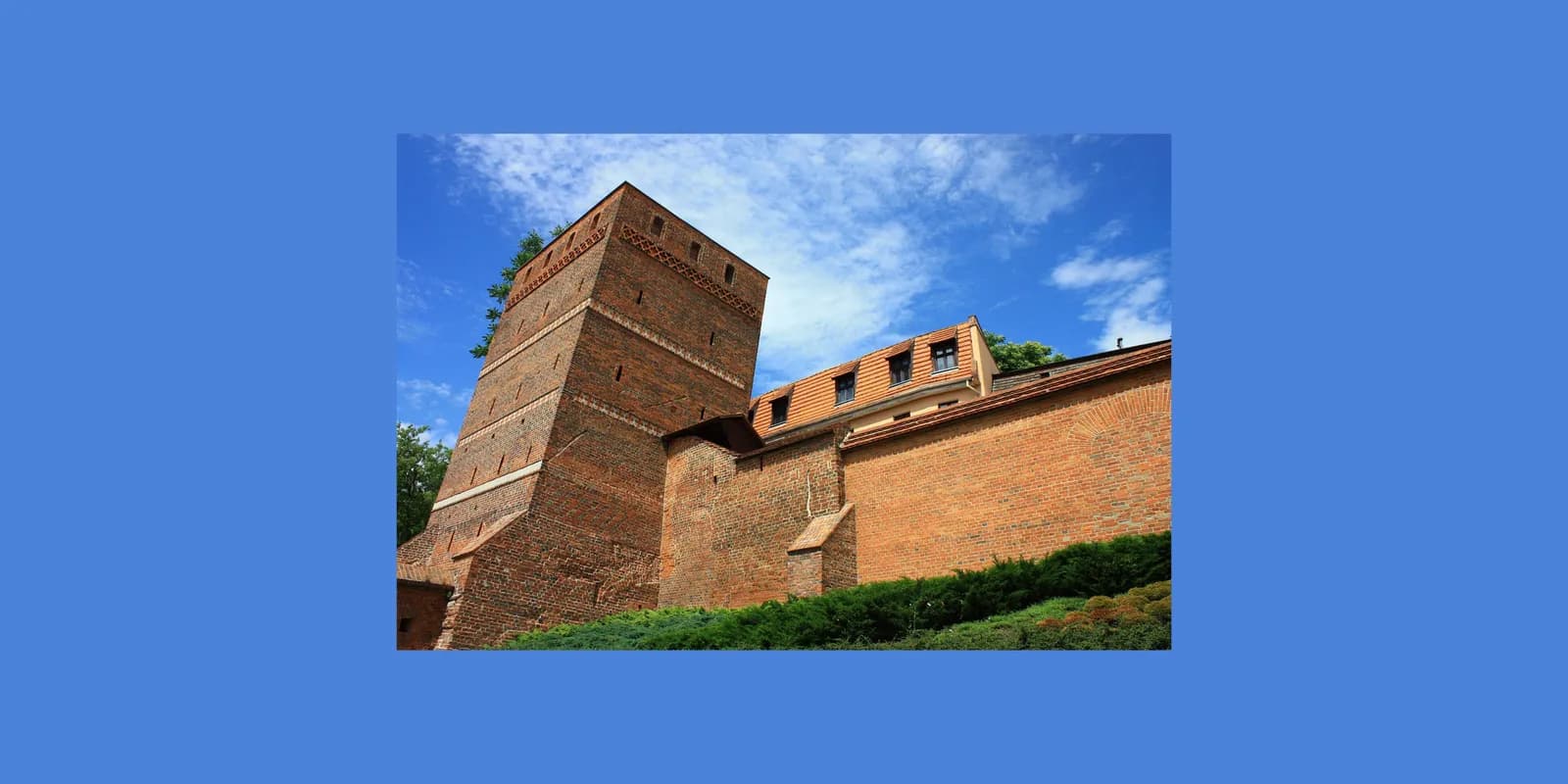
The Krzywa Wieża, or Leaning Tower, has been part of Toruń's skyline for more than 700 years. Its distinctive angle has made it one of the city's best-known landmarks, while its changing role over the centuries reveals something of Toruń's own history.
Today, it is an easy landmark to find during a walk through the Old Town. Look a little closer, though, and there is considerably more to discover.
A tower built to defend medieval Toruń
The Leaning Tower dates from the late 13th or early 14th century, when Toruń was developing its medieval fortifications.
It was built as part of the city's defensive walls, rather than as a freestanding curiosity. The tower was constructed in several stages, with its early form subsequently enlarged during the 14th century.
The defensive system surrounding medieval Toruń included numerous towers and gates. Some of the early towers were open towards the town, allowing defenders to be supplied and making it harder for an attacking force that captured a tower to turn it against the city.
The Leaning Tower formed part of this wider network of fortifications along the southern edge of the Old Town.
So, why is it leaning?
The explanation is considerably less romantic than some of the stories attached to the building.
The tower was constructed on unstable ground, and movement in the ground caused it to settle and lean. Heritage research places the top of the tower approximately 1.4 metres away from the vertical, with the building inclined towards the north by around six degrees.
Its unusual shape is therefore the result of ground movement rather than an intentional medieval design.
The tower's architecture also provides clues about its history. Its openings reflect the building's inclination, while the Gothic brickwork and decorative details remain visible despite the changes the structure has undergone over the centuries.
The tower that changed its purpose
As Toruń's defensive needs changed, the Leaning Tower found new uses.
By the 18th century, it had been adapted as a women's prison. Changes were made to the interior, including floors and the staircase, to accommodate its new function.
In 1826, the building was adapted again, this time becoming a fortress smithy and accommodation for an armourer.
It eventually became residential. According to Poland's National Heritage Board, it remained in residential use until 1973.
Few buildings in Toruń have such a varied record of everyday use. What began as a defensive structure became a prison, a workplace and a home, reflecting the changing needs of the city around it.
The Teutonic Knight and the crooked tower
The tower's distinctive appearance has naturally attracted legends.
The best-known tells of a Teutonic Knight who fell in love with the daughter of a wealthy Toruń merchant. Members of the Order were expected to remain celibate, and the knight was punished for breaking the rules.
His punishment, according to the story, was to build a crooked tower as a reminder of his crooked behaviour.
There is no historical evidence that this is how the tower came to lean, but the story has become firmly attached to the landmark.
It also gave rise to one of Toruń's more unusual tourist traditions. Visitors can stand with their backs against the tower and attempt to keep their balance. According to the legend, those with a guilty conscience will be unable to do so.
The building itself, of course, has no way of testing anyone's conscience.
A river, a tower and the name Toruń
Another local legend links the tower with the Wisła.
In this story, the river gradually approaches the tower and threatens to undermine it. The tower complains, and the Wisła responds with the words "to ruń", meaning roughly "then fall".
Travellers supposedly overheard the exchange and took the words as the name of the city.
It is a charming explanation, but like the story of the Teutonic Knight, it belongs to Toruń's folklore rather than its documented history.
The legends do, however, add another layer to a building that has spent centuries at the meeting point of the city and the river.
Part of Toruń's medieval streetscape
The Leaning Tower stands at Pod Krzywą Wieżą 1/3, in the south-western part of the Old Town.
Its position makes it a natural stop during a walk around Toruń's medieval centre. The surrounding defensive walls, gates and towers help put the building into context.
The Old Town itself forms part of the Medieval Town of Toruń UNESCO World Heritage Site, recognised for its exceptionally well-preserved medieval urban layout and historic buildings.
The tower is therefore best appreciated alongside the streets and structures around it. Its story makes considerably more sense when you can see the relationship between the fortifications, the Old Town and the Vistula.
A landmark worth looking up from the pavement
Toruń has no shortage of impressive Gothic architecture, but Krzywa Wieża has something that immediately catches the eye.
Its tilt is the first thing most people notice. The history comes afterwards: a medieval defensive tower built on unstable ground, gradually drawn out of alignment, adapted for entirely different purposes and eventually preserved as one of the city's familiar landmarks.
The legends have helped make it memorable, but the documented history is just as engaging. The tower has survived because Toruń changed around it, finding new uses for an old building rather than simply leaving it behind.
Today, it remains an unmistakable part of the Old Town, leaning quietly beside the medieval walls and providing one of the most distinctive photographs in Toruń.
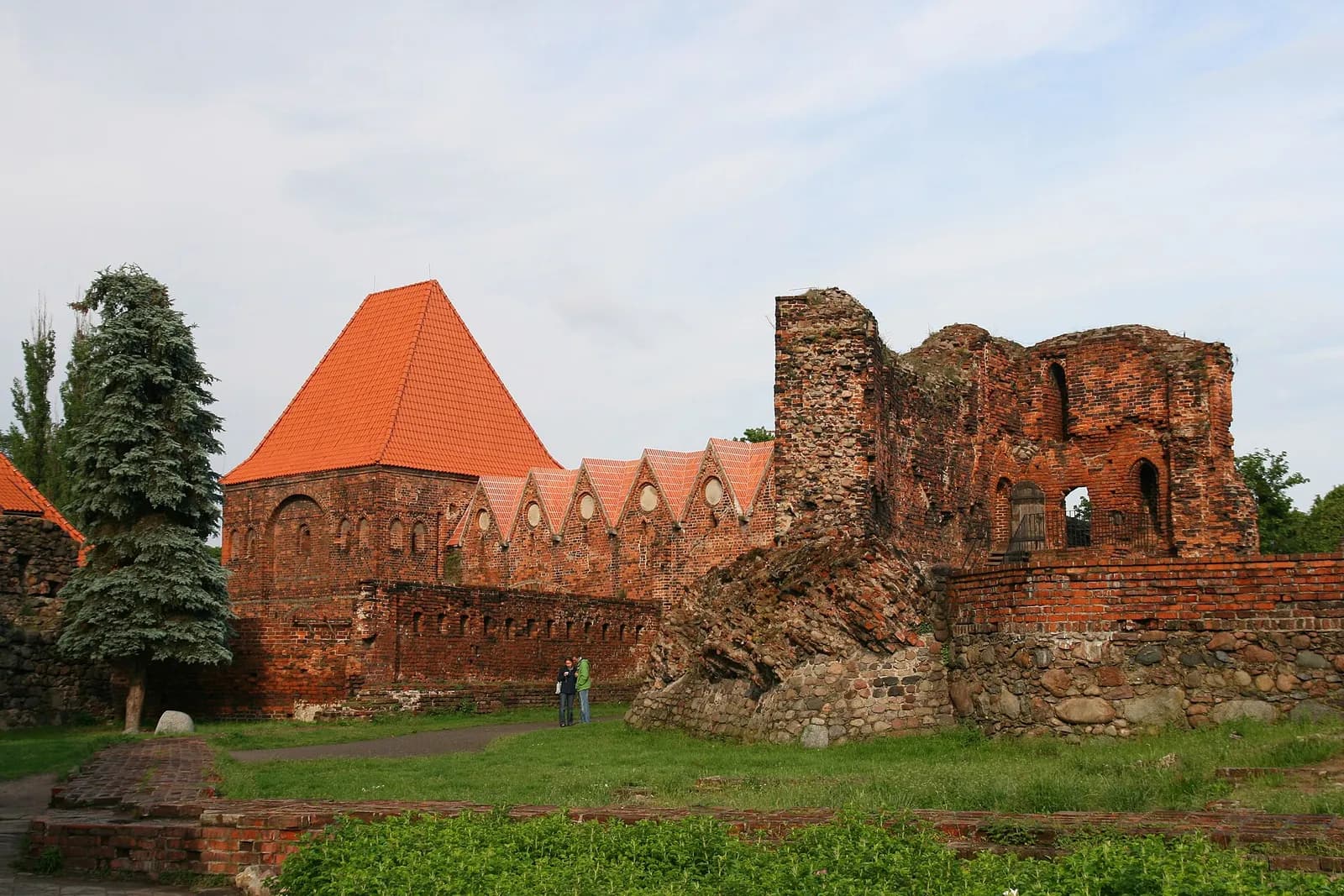
See more: A Walk Through the Ruins of Toruń's Teutonic Castle
Sources: torun.pl, zabytek.pl
Image credit: Dawid Galus, Wikimedia Commons, CC BY-SA 3.0