Whether you arrive by train, stroll through the cobbled streets of the Old Town or pause outside one of the city's historic bakeries, it won't take long before the unmistakable aroma of gingerbread fills the air. In Toruń, gingerbread is much more than a sweet treat. It is part of the city's identity, woven into its medieval history, local traditions and everyday life.
For more than seven centuries, Toruń has been synonymous with gingerbread. Long before it became a popular souvenir for visitors, it was a luxury product prized across Europe, crafted using valuable imported spices and closely guarded family recipes. Today, that remarkable heritage continues to attract food lovers, history enthusiasts and families looking for one of the most authentic experiences in Poland.
If you are planning a visit to Toruń, discovering its famous gingerbread is every bit as essential as exploring the UNESCO-listed Old Town or learning about the city's most famous son, Nicolaus Copernicus.
Why is Toruń famous for gingerbread?
Toruń's reputation as Poland's gingerbread capital did not happen by chance. It was shaped by geography, trade and craftsmanship.
Founded in the 13th century on the banks of the Vistula River, Toruń quickly became one of the region's most important trading centres. As a member of the Hanseatic League, the city enjoyed commercial links with ports across northern Europe, allowing merchants to import valuable spices from Asia through Baltic trade routes.
At a time when cinnamon, cloves, ginger, nutmeg and cardamom were among the world's most expensive ingredients, Toruń's bakers had access to products that were beyond the reach of many other towns.
Combined with locally produced honey, rye flour, butter and eggs from the surrounding countryside, those imported spices created the perfect recipe for what would become one of Poland's best-known regional specialities.
A baking tradition stretching back more than 700 years
The earliest written record of a Toruń gingerbread baker dates from 1386, when city documents mention a craftsman named Niclos Czan. Historians believe the tradition was already well established by then, meaning gingerbread had likely been produced in Toruń for decades before it first appeared in official records.
During the Middle Ages, gingerbread was considered a luxury rather than an everyday indulgence. Wealthy merchants, members of the nobility and royal courts all prized the richly spiced delicacy, while beautifully decorated biscuits were often presented as prestigious gifts during important celebrations.
For the people of Toruń, gingerbread soon became more than a successful business. It helped build the city's reputation far beyond its medieval walls.
The secret behind Toruń gingerbread
One of the reasons Toruń gingerbread became so highly regarded was the extraordinary care taken during its preparation.
Unlike many modern recipes, traditional dough was often prepared months or even years before baking. A simple mixture of flour, honey and spices would mature slowly in cool cellars, allowing natural fermentation to deepen the flavour and create the distinctive texture associated with authentic Toruń gingerbread.
Only shortly before baking were the remaining ingredients added.
Recipes were closely guarded by families and baking guilds, with techniques passed down through generations. Much of this knowledge remained a closely protected secret, helping maintain the exceptional quality for which Toruń became famous.
More than biscuits: edible works of art
One of the most distinctive features of historic Toruń gingerbread was its appearance.
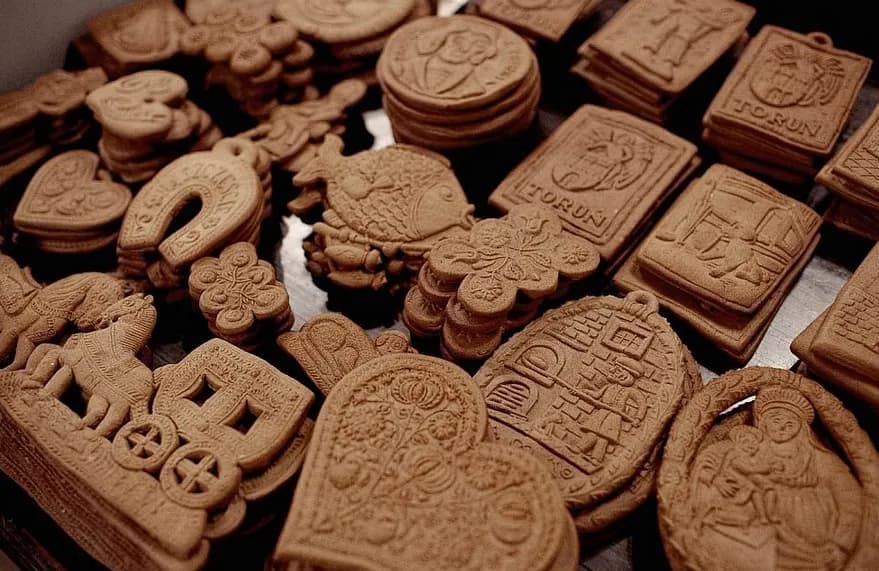
Rather than being cut into simple shapes, the dough was pressed into carefully carved wooden moulds created by skilled local craftsmen. These intricate designs transformed every biscuit into a miniature work of art.
Popular motifs included:
- Kings and queens
- Knights and noblemen
- Saints and biblical scenes
- Flowers and animals
- The Toruń coat of arms
- Decorative patterns inspired by everyday medieval life
Many original moulds have survived and can still be admired in museums across the city, providing a fascinating insight into the artistry that accompanied the baking tradition.
The legend of Katarzynki
No discussion of Toruń gingerbread would be complete without mentioning Katarzynki, the city's most recognisable biscuit.
Made from six connected circles, its distinctive shape has become one of the defining symbols of Toruń.
As with many historic traditions, several legends attempt to explain its origins.
The most popular tells the story of a young baker's daughter named Katarzyna, who accidentally placed six circles of dough too close together before baking. Instead of separating, they joined into an elegant new shape that quickly became a favourite with customers.
A more practical explanation suggests the design simply allowed bakers to minimise wasted dough during production.
Whether fact or folklore, both stories continue to form part of Toruń's rich cultural heritage and are still shared with visitors today.
Gingerbread in modern-day Toruń
Although centuries have passed since the first gingerbread was baked here, the tradition remains firmly part of everyday life.
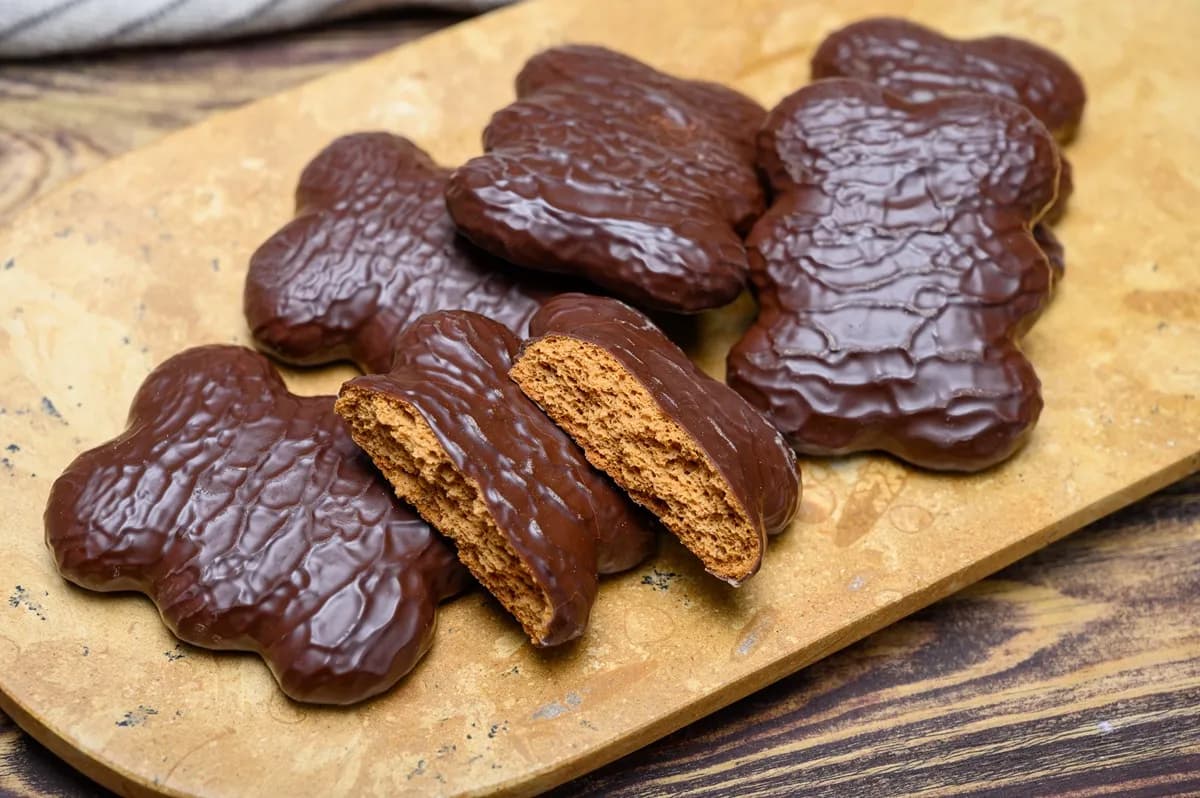
Independent bakeries, cafés and specialist shops throughout the Old Town continue to celebrate the city's most famous delicacy. Visitors can choose from classic honey-rich gingerbread, beautifully decorated biscuits, chocolate-covered treats and, of course, the iconic Katarzynki.
The scent of freshly baked gingerbread has become as much a part of Toruń's atmosphere as the Gothic churches and medieval townhouses that surround the Market Square.
It is one of the many reasons why visitors return throughout the year.
A tradition that still shapes Toruń
Many cities preserve their culinary heritage through museums and archives alone. Toruń is different.
Here, gingerbread remains a living tradition, enjoyed by residents, celebrated by local businesses and discovered every day by visitors from around the world. It reflects the city's history as a thriving trading centre, showcases the craftsmanship of generations of bakers and continues to play an important role in Toruń's cultural identity.
Whether you are sampling freshly baked Katarzynki, exploring centuries-old wooden moulds or simply following the aroma of spices through the Old Town, gingerbread offers one of the most authentic ways to experience Toruń.
More than 700 years after the city's first bakers began mixing honey with precious imported spices, their legacy continues to define one of Poland's most beautiful historic cities.