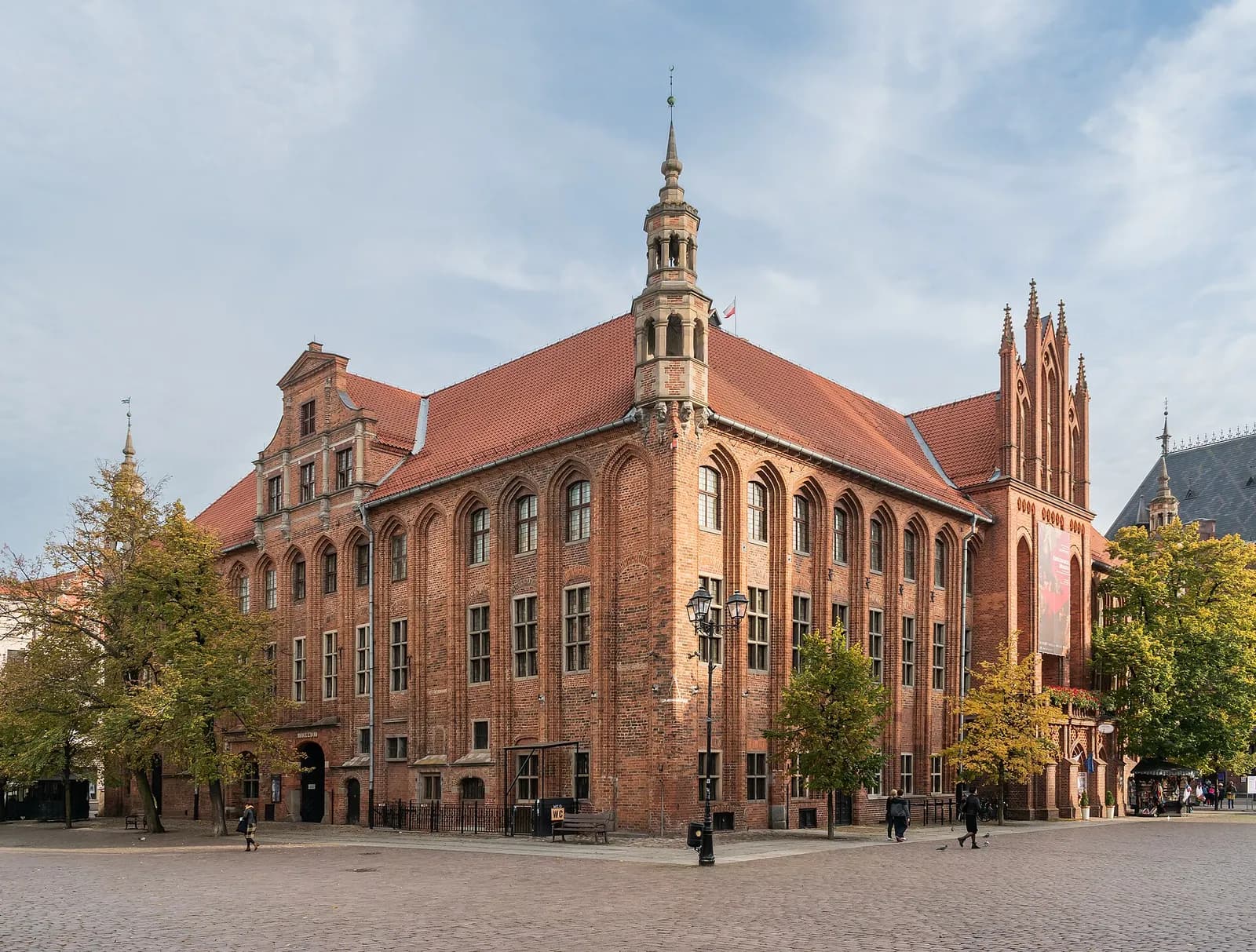
In the centre of Toruń, a historic burgher house provides an unexpected setting for a collection spanning centuries of Asian art and craftsmanship.
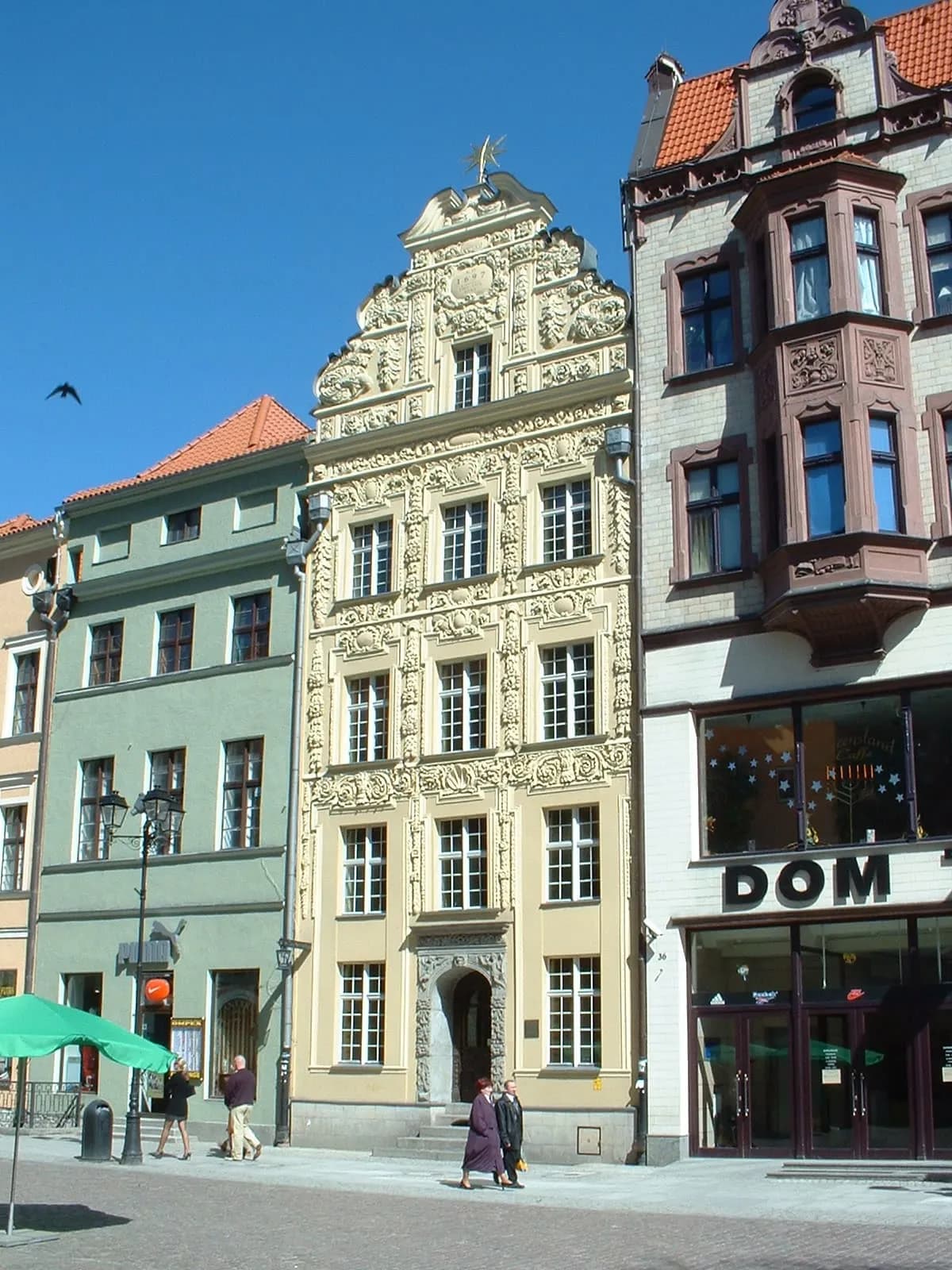
On Toruń's Old Town Square, the Tenement House under the Star is easy to recognise. Its ornate façade and distinctive name draw attention to a building whose history reaches back to the Middle Ages. Yet its significance today extends beyond the architecture itself.
Inside the tenement house is the Asian Art Museum – Tenement House under the Star, an institution where objects from across Asia are displayed within one of Toruń's historic urban interiors.
The building has changed considerably over the centuries. Its Gothic walls, Baroque façade and richly decorated interiors reflect successive periods of architectural development. Among the details preserved inside are a spiral wooden staircase decorated with figures of Minerva and a lion, as well as polychrome Mannerist ceilings. The result is a setting in which the museum's collections are encountered within a historic object in their own right.
A collector helped bring the Orient to Toruń
The relationship between the building and Asian art dates to 1970, when the Museum of Far Eastern Art opened here with what the museum describes as Poland's first permanent exhibition of Far Eastern art.
Much of the character of that collection can be traced to Tadeusz Wierzejski, a collector and major benefactor of Polish museums after the Second World War. The most valuable objects presented in the World of the Orient exhibition came from his collection.
The objects offer an unusually broad introduction to Asian artistic craftsmanship. Among them are ancient Chinese bronzes, some more than 3,000 years old, alongside Chinese and Japanese porcelain, jade, agate and steatite objects, ceramics and stone reliefs. The collection also includes terracotta figures from the Tang dynasty.
What makes the collection interesting is not simply its age or variety. Objects made for different purposes and in very different cultural contexts are brought together within a historic Toruń house, allowing visitors to consider Asian art through materials, techniques and forms rather than through a single national tradition.
The museum's wider collections include objects from countries and regions including China, Japan, India, Thailand, Tibet and Indonesia. The breadth has become even more apparent following the museum's recent reorganisation.
A historic house becomes part of the experience
The museum's recent development also reflects a change in how the collection is presented. In 2026, the former Museum of Far Eastern Art changed its name to the Asian Art Museum – Tenement House under the Star, emphasising the broader geographical context of its holdings.
The museum reopened in April 2026 following renovation work and a reorganisation of its displays. The renewed presentation brings together art and craftsmanship from a wider range of Asian cultures, while retaining the distinctive historic character of the tenement house.
That combination is perhaps the most interesting reason to visit. The museum is not housed in a neutral gallery designed solely to display its collection. The building contributes its own layers of history, from Gothic construction to later decorative changes, while the objects introduce another set of histories from far beyond Toruń.
There is also an oriental garden in the courtyard, covering more than 200 square metres. Its design includes a paved path, lanterns, rocks, plants associated with East Asian garden traditions and a wooden pavilion. The pavilion has hosted tea ceremonies and educational activities since 2009. At present, however, the garden is temporarily closed because of technical work.
The museum continues to use the collection as a starting point for learning and discussion. Recent programming has included meetings examining individual objects and the techniques and symbolism behind Asian craftsmanship, as well as exhibitions exploring Japanese artistic traditions.
For Toruń, the museum adds another dimension to the city's cultural landscape. Visitors arriving to explore its medieval centre can step from one of Europe's historic urban environments into collections shaped by artistic traditions from across Asia.
The Tenement House under the Star therefore works as more than a container for the museum. Its own architectural history becomes part of the encounter, creating a conversation between the place in which the objects are displayed and the cultures from which they originated.
Visitor Information
Museum: Asian Art Museum – Tenement House under the Star
Address: Rynek Staromiejski 35, Toruń.
Opening hours:
1 May–29 September
Tuesday–Sunday: 10:00–18:00
Monday: closed
1 October–30 April
Tuesday–Sunday: 10:00–16:00
Monday: closed
Admission:
Standard ticket, Asian Art Museum + Tony Halik Travellers' Museum: PLN 30
Reduced ticket, Asian Art Museum + Tony Halik Travellers' Museum: PLN 25
Wednesdays: free admission to permanent and temporary exhibitions
The last entry to the exhibitions is 30 minutes before closing. The oriental garden is temporarily closed to visitors due to technical work.